

Reading Solana Like a Human: Practical Analytics, Transactions, and Why Solscan Still Matters
Whoa! I was digging through a stack of transaction logs the other day. Really? Yeah. My first impression was: somethin’ weird was going on with a set of pending SOL transfers. At first it seemed like a simple nonce hiccup, but then the pattern widened into something that smelled like an RPC inconsistency across different nodes, and that changed everything about how I traced the problem.
Here’s the thing. Solana feels fast until it doesn’t. Hmm… most people only notice when a wallet shows «processing» for three minutes, which in Solana time feels like an eternity. My instinct said check the signature first, then the slot confirmation statuses across explorers and your own RPC endpoint. Initially I thought a failed transaction meant the program was buggy, but then realized that many failures are RPC- or fee-related, or even caused by simultaneous state changes that race each other—so you have to look at logs and inner instructions, not just the top-level status.
When you dig into Solana analytics you need a little bit of patience, and a system. Short searches rarely cut it. You need to follow the breadcrumbs: signature → slot → confirmations → logs → token balances. Wow! That chain shows you where lamports moved, which program ran, and whether an SPL token mint was involved. If you skip steps you miss context. Honestly, that part bugs me because people repost broken help threads without the full trace, and then everyone chases the wrong fix.
How I use explorers to answer real questions — and where solscan explorer fits
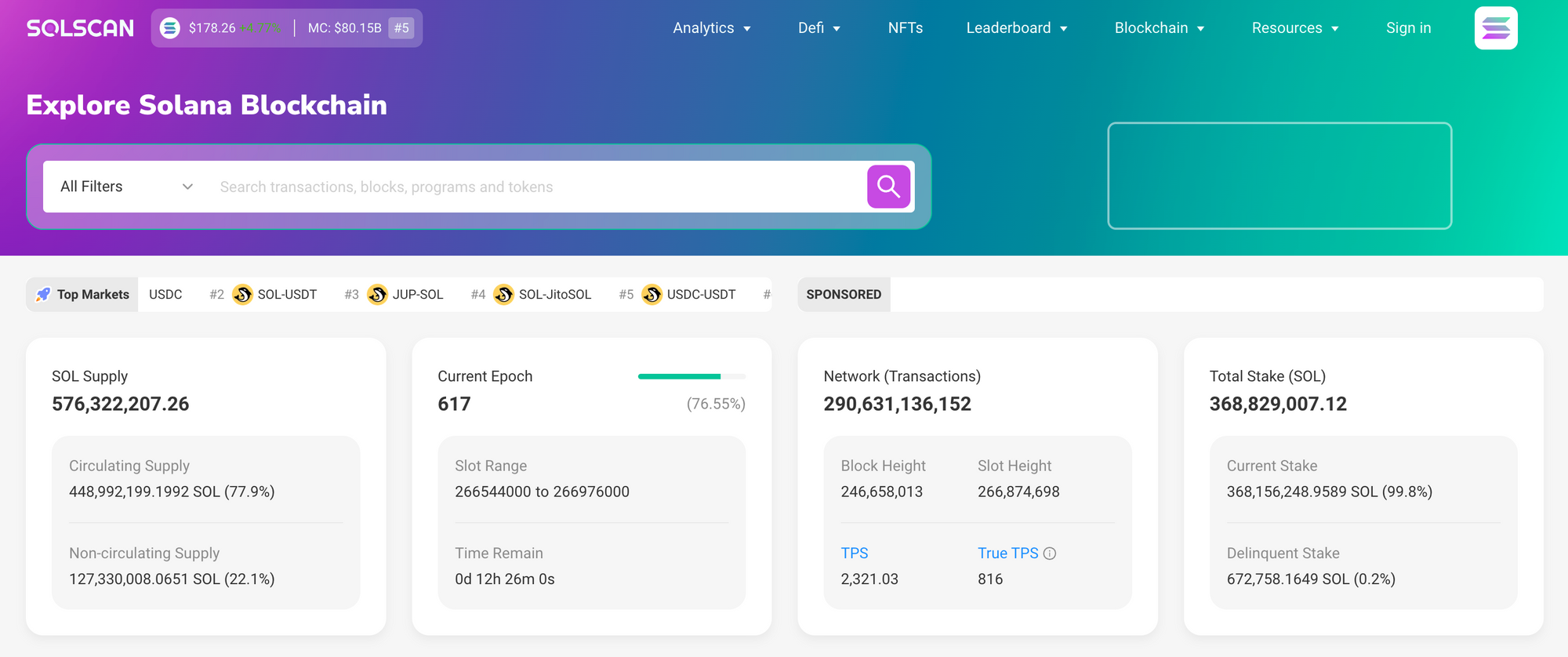
Okay, so check this out—I’ve used several explorers, and for my workflow the solscan explorer becomes the go-to when I need clear logs and token transfer views fast. It surfaces inner instructions cleanly, and its token transfer list is easy to parse when I’m cross-checking the token program behavior against event logs. On one hand you get dashboards that summarize activity by program and token; on the other hand you sometimes need to drop into raw logs to see why a particular instruction returned an error and where rent-exempt balances were insufficient.
Seriously? Yep—seriously. When a transaction fails, check for «insufficient funds for rent» or «account not rent-exempt» messages in the log. Also check for «InstructionError» entries and inner instruction traces, because often the top-level error masks a deeper issue. Actually, wait—let me rephrase that: top-level errors tell you an outcome, but inner logs tell you why that outcome occurred. My workflow is repetitive, but it works: load signature, expand logs, inspect inner instructions, review account pre/post balances, and then check token transfer records if the transaction involves SPL tokens.
There are practical things people miss. For example, SOL amounts are in lamports by default, and conversion is very very important when you eyeball a balance change. Also, slot vs blockfinalization matters: a transaction can appear confirmed but not finalized, and if you rely on the wrong confirmation level you might act too early. Another tip: when you see duplicate signatures in a short period, that often means a client retried the same transaction due to RPC timeouts, and you’ll want to check whether duplication caused competing state transitions.
On one occasion I chased a phantom airdrop for hours. It showed in a day’s summary, but the underlying token account hadn’t been created rent-exempt, so the airdrop bounced and produced a messy set of inner errors. Ugh. I learned to check token account creation logs before assuming the token transfer succeeded. That saved me a headache later when reporting to a client, and it’s a pattern I’ve seen across wallets—from mobile apps to custom CLI scripts.
Analytics dashboards add another layer. They can show you token holder distributions, program call frequency, and volume spikes over time. Those views are handy when evaluating market activity or unusual contract behavior. But dashboards smooth over rare events. If you’re investigating an anomaly, raw logs are your source of truth. Hmm…
On scalability and nodes: watch the RPC you query. Different providers can return different confirmation states, especially during network congestion. My rule is to cross-check with at least two independent RPC endpoints when troubleshooting. On the flip side, be careful with rate limits; a noisy debug session can exhaust your quota fast. One good trick is to batch signature queries rather than hammering single-signature lookups repeatedly.
Tracing SOL transactions often requires reading the program’s instruction layout. Not every explorer decodes every program perfectly. Some custom programs hide logic in inner instructions that generic decoders miss, and then you’re left guessing. So pair explorer views with on-chain program source when you can. If source isn’t available, reconstruct intent from logs and pre/post-account state changes. It takes time, but it’s a reliable fallback.
Here’s another thing: staking and vote accounts behave differently from SPL tokens. Stake moves can be subtle, because delegate actions modify both stake and vote account structures across epochs, and the related rewards appear later when the epoch closes. Don’t mistake delayed balance changes for lost funds. Patience, and check stake activation status.
FAQ
What should I check first on a failed Solana transaction?
Start with the transaction signature and expand the logs. Look at inner instructions and account balance diffs. Check for common errors like insufficient lamports for rent, InstructionError, or signature duplication due to retries. If you still can’t see the issue, cross-check the transaction slot across explorers and RPC endpoints to rule out confirmation inconsistencies.
How do I interpret confirmation statuses?
Understand the levels: processed, confirmed, and finalized. Processed is fastest but least safe. Finalized means the transaction is irreversible in practice. Use «finalized» when you need absolute certainty, and accept «confirmed» for faster UX in lower-risk flows.
Can explorers help with token investigations and audits?
Yes. Use token transfer lists, holder distribution charts, and inner instruction traces to audit token flows. But pair explorer output with raw logs for forensic-level certainty, and remember to convert lamports to SOL when checking economic values.